
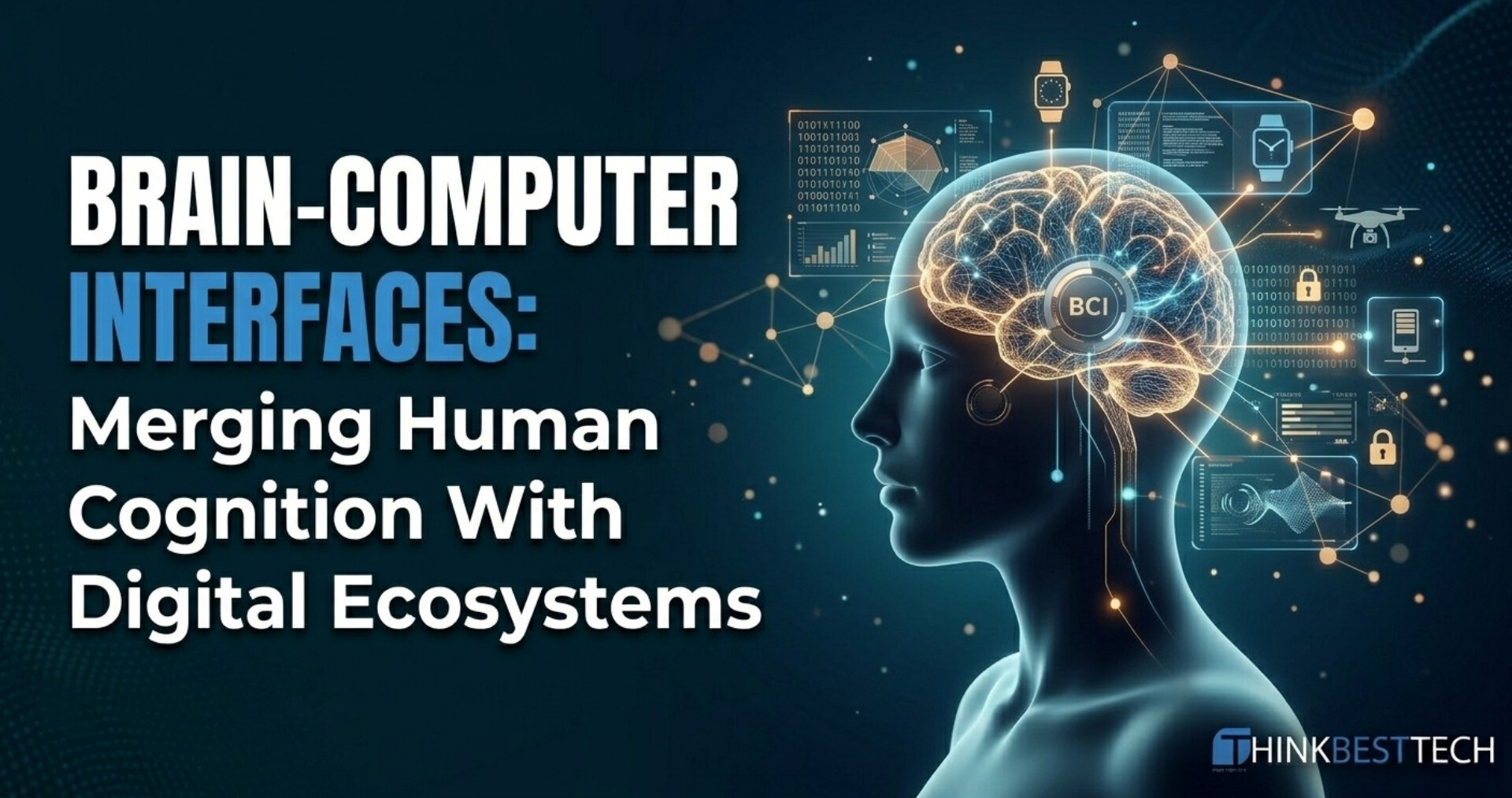
Brain-Computer Interfaces: Merging Human Cognition With Digital Ecosystems
Direct communication between human cognition and external hardware represents one of humanity’s most ambitious technological leaps. Brain-Computer Interfaces bypass traditional physical inputs like keyboards, mice, or touchscreens entirely. Instead, these advanced systems translate raw neural activity directly into actionable digital commands. By capturing electrical signals generated by cortical neurons, specialized software can interpret human intent and execute corresponding actions on connected devices. This seamless integration between biological systems and silicon processors promises to fundamentally alter how society interacts with modern computational environments.
The most immediate and profound impact of neural technology resides within medical science and physical rehabilitation. For individuals suffering from severe motor impairments, spinal cord injuries, or paralysis, this innovation offers a tangible pathway to restored autonomy. Electrodes implanted directly into the motor cortex or resting non-invasively upon the scalp can capture the conscious intention to move a limb. These complex signals are then decoded in real-time by microprocessors and routed to robotic prosthetics, computer cursors, or assistive exoskeletons. Furthermore, ongoing research is rapidly advancing toward treating debilitating neurological conditions, utilizing targeted electrical stimulation to mitigate chronic symptoms.
While clinical applications dominate early development, the consumer electronics industry is actively engineering non-invasive neural wearables for the general public. These devices typically take the form of specialized headbands, smart glasses, or earbuds equipped with miniaturized electroencephalography sensors. Users can perform basic commands, such as pausing audio playback, dimming smart lighting, or navigating digital menus, simply by concentrating their attention. As sensor accuracy improves and machine learning models become highly proficient at filtering out background cognitive noise, tech enthusiasts will witness a gradual shift toward hands-free, thought-driven operating systems integrated across everyday smart devices.
Harvesting telemetry directly from the human mind introduces unprecedented ethical considerations and severe privacy challenges. Cognitive data is arguably the most sensitive, unfiltered information a person can generate. If an application can map brainwaves to determine emotional states, fatigue levels, or subconscious preferences, that data becomes incredibly valuable for behavioral profiling. Establishing rigorous cryptographic protocols to encrypt neural transmissions is an absolute necessity for hardware manufacturers. Furthermore, global legislative frameworks must evolve rapidly to define cognitive liberty, ensuring that individuals retain absolute, irrevocable ownership over their biological metrics.
Interpreting the massive influx of biological data requires immense computational power and sophisticated software architecture. Human brainwaves are inherently chaotic, dynamic, and unique to each individual user. Advanced artificial intelligence algorithms are deployed to identify distinct patterns within this neurological noise, essentially learning and adapting to the user’s specific neural language over time. This demanding process requires highly efficient, specialized microchips capable of performing complex pattern recognition locally on the wearable device to minimize transmission latency. As edge processing capabilities expand, these neural interfaces will become significantly faster, creating a real-time feedback loop that feels instantaneous.